

The Idea Machine: Putting Socrates’ Prophecy to the Test


When I was young, wandering the aisles of a local bookstore or public library was a journey of quiet wonder. The titles on the spines, the catchy back-cover blurbs and scent of fresh-cut paperbacks, stirred in me a feeling of infinite possibility—and coziness. To be among books was like being at home.
Reading Joel J Miller’s The Idea Machine reminded me of this feeling, and how much I miss it in a digital age where paper has given way to pixels, and where bookstores and libraries are more like jazzy community spaces than hushed temples of literary wonder. The Idea Machine left me convinced that we won’t be able to dispense with print books. Amid its many delights it also produced an unsettling insight, though it didn’t fully dawn on me until the end.
The Greek philosopher Socrates famously argued that books would weaken our memory and end up misinterpreted in the hands of fools, but as Miller shows, that Athenian sage was a hypocrite—he admitted to benefiting from reading old books—and the whole history of books seems to prove him wrong.
“Without books, history is silent, literature dumb, science crippled, thought and speculation at a standstill,” wrote historian Barbara Tuchman. “Without books, the development of civilization would have been impossible.” Miller’s book is an exploration of this basic truth, addictively readable and so memorably woven I’m not sure where to begin.
Here’s a spot: In today’s mostly secular West, it’s easy to forget how much the Judeo-Christian worldview form the foundation of our civilization, layered on top of those cranky Greek intellects and imperial Rome. Meanwhile, modern Christians themselves often forget that early Christians didn’t have a Bible in the sense that we have one today. In the beginning there were only people who knew Jesus, and then people who knew the people who knew Jesus—and knew them so well that when distorted writings like the “gnostic gospels” came along, purporting to be the words of Jesus, they were promptly recognized as frauds.
Eventually, of course, the initial oral tradition and scattered writings of the faith were assembled into a single volume, with the Emperor Constantine ordering fifty copies of sacred Scripture “to be written on prepared parchment in a legible manner”, and to be distributed with the use of two public carriages across the Roman roads. This might have been the first example of written ideas going viral with the nudge of an influencer.
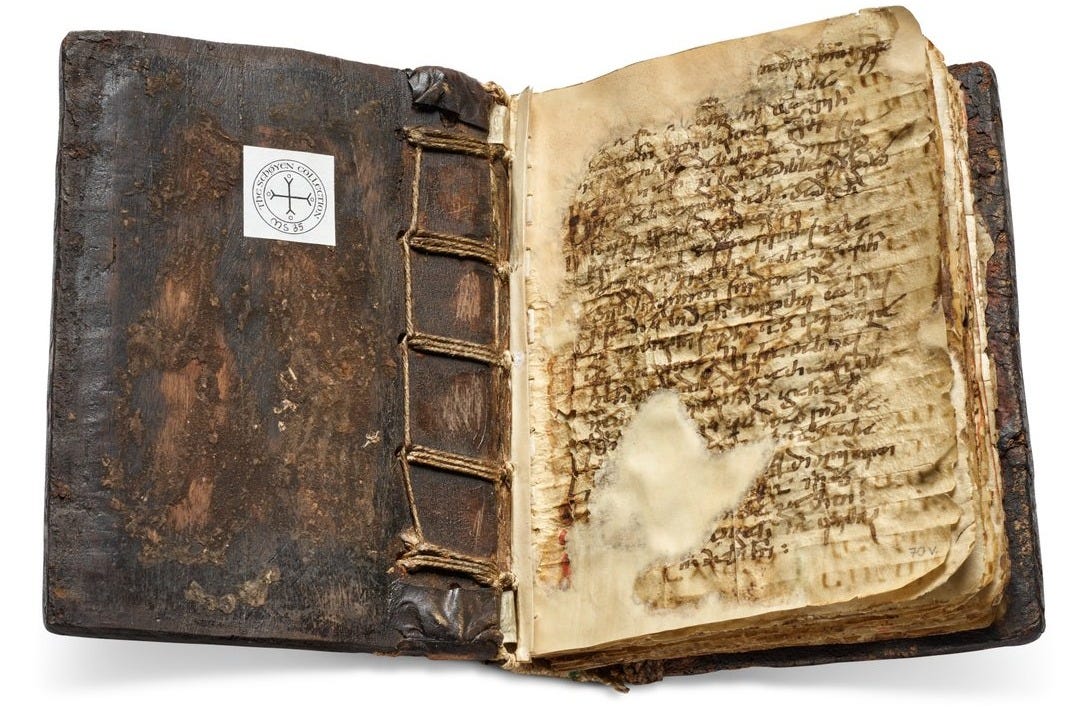
Classical pagan writings also survived, by virtue of being recopied for preservation. This laborious work was usually carried out by monks, although they would often neglect to recopy pagan writings if forced to choose between pagan and Christian, partly out of bias, and partly for practical reasons: a lack of paper. Plus, the fact that pagan writings were typically written on papyrus scrolls rather than higher quality parchment (which emerged only later) meant these writings were less likely to survive over the centuries.
Whether a technology lasts depends on its durability.
So, we might wonder: Just as parchment, which is made of the skin of a calf, sheep or goat, outlasted papyrus, will print books outlast digital text? Miller doesn’t pose this question, but it did occur to me, as did many other reflections, and this is one of the things I relished about The Idea Machine.
It wasn’t only the Christian West that was built on ink and paper, but Islamic civilization. During its Golden age, from the eighth to the thirteenth century, Muslim scholars “produced pathbreaking work in mathematics, medicine, chemistry, optics, and astronomy.” In many ways they were way ahead of the West, and then something happened: the printing press and the democratization of ideas.
Religions of the book—Judaism, Christianity, and Islam—tend to demand some degree of alignment with ideas either derived from or reflected in their divine texts—namely, the Hebrew Torah, the Old and New Testaments, and the Quran. A book provides an anchor to moor a community to a certain understanding of the world. But it also provides a means to unsettle that mooring and send the community adrift in different directions. Islamic authorities recognized the potential for the printing press to destabilize their community and banned it. Christians welcomed the printing press and soon found their entire civilization ruptured.
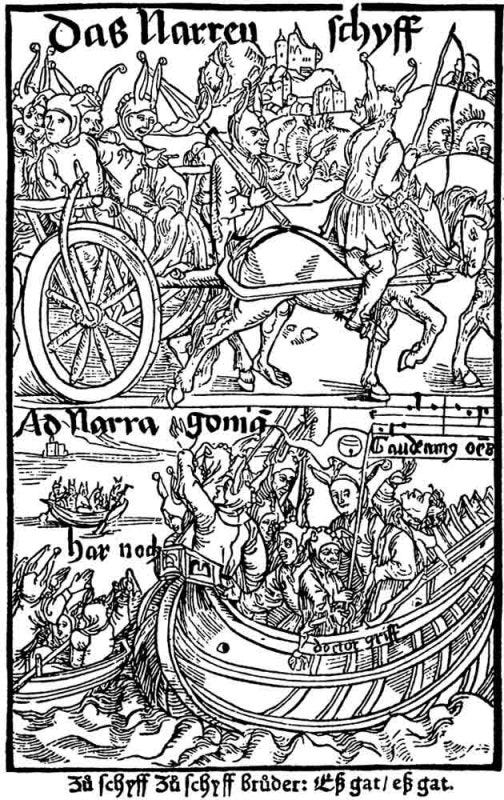
Aren’t we facing the same challenge today? Anybody can say anything on the Internet. Authority has been flipped around, turning non-experts into experts and village idiots into philosophers. As an old professor friend of mine remarked over twenty years ago, when social media was still young: “Everybody thinks what they have to say matters just because their voice can be heard.”
Yet Miller left me feeling hopeful. We are not the first generation to face a deluge of bad writing. Before there was digital slop, there was ink slop. More than that, Miller points out that
societies thrive on amplifying virtue rather than battling vice, and books themselves remind us that what counted as vice in one generation might count for virtue in the next, and vice versa. Like it or not, cultures evolve, and freeing individuals to think, speak, and live as they choose is the best way to navigate for all parties involved.
The liberty to speak and write freely matters not because it is valued by one or another political party, but because history has proven it helps a civilization thrive.
And not just in terms of knowledge. During the dark years of American slavery, there were many efforts to ban slaves from learning how to read or write. Slaves who read the Bible might see themselves mirrored in the enslaved Israelites, or use writing to coordinate efforts to free themselves, or, of course, write books about their plight—which some did, rocking the conscience of the nation.
One slave child traded apples for reading lessons from a friend. Other slaves practiced writing letters on barn walls. Humans hunger for learning. Yet book-learning is, in fact, cognitively unnatural. Unnatural, in the sense that the ability to read and write does not come automatically. We have to work out the letters, and associate them with sounds, patterns, meanings. It’s arduous, yet it enlarges the mind by developing deep attention, phonemic decoding, memory, rational thought, among other mental processes.
And then the ideas blossom. Multiply. How do we organize them all?
The other day, I needed to find an old Latin textbook somewhere in our 3000-volume home library, so I called downstairs to my wife Ruth Gaskovski: “Where’s my old Latin book, the thin one with the red cover?” After a moment’s thought, she called back, “In the library, left side, third shelf.” So I went and I looked, and it was nowhere to be seen.
Oops, there it was. She was right after all. My wife organized all the sections of our library, which makes her not only a librarian, but a household search engine for books.
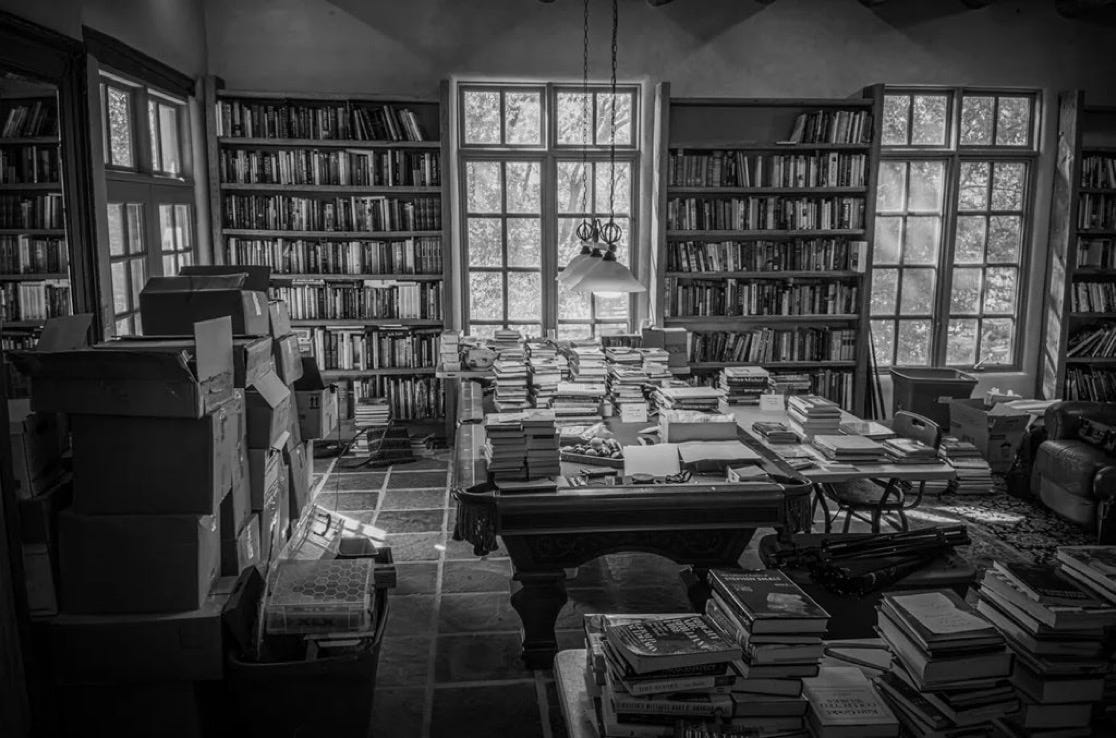


As Miller points out, the problem of organizing knowledge has been with us since the ancient kings of Mesopotamia who assembled libraries of clay tablets containing records, omens, oracles, legislation, myths, spells, incantations. How might a bookworm like Ashurbanipal, who had 30,000 tablets, find the tablet he was looking for?
The solution definitely wasn’t his wife. It was metadata. Categorize your tablets by subject, and label them. This was the earliest browser, the first Internet; what we have today in digital form is merely the latest iteration of a methodology that started thousands of years ago.
I would point out, of course, that the Internet has brought challenges that Ashurbanipal probably didn’t have to deal with. Despite its benefits, the Internet has messed with our attention, to say nothing of our manners and social behavior. Still, reading Miller’s book, one can’t help feeling that the Internet and generative AI are the inevitable consequence of a society that wants to hold onto all of its ideas and carry them into the future, in searchable form.
It’s an understandable motivation, yet here’s the thing that unsettled me. For most of the history of reading and writing, two things have been preserved: our ability to maintain attention without getting distracted, and to deploy a range of cognitive skills to think through ideas.
Whether scrolls, codices, or books, we would not have been able to benefit from these “idea machines” had they distracted us or made us cognitively lazy. Imagine a medieval monk copying an ancient scroll, and every so often a pornographic image flashes on his parchment. Would he ever finish the copy? Isaac Newton worked out his Principia Mathematica in a private notebook filled with “scribbles and crossouts, revisions of revisions”; yet if the margins of that same notebook had glimmered with media headlines and YouTube sidebars, Newton’s great ideas might not have been so great—or might have taken a lot longer.
These examples are not absurd. They are very much like many of our current digital technologies: all-in-one devices that cannibalize our attention, or else just make everything so easy that we don’t need to think for ourselves.
Socrates argued that the advent of writing would weaken our attention and amplify the voices of fools. This prophecy has been tested for almost 2500 years, and for the most part, our cognitive skills have remained intact and (despite a few fools) our society has progressed.
Will Socrates’ prophecy be fulfilled the age of AI?
Miller doesn’t seem to think so. But I couldn’t help wonder, and couldn’t help talking about it with others. Which is one of the great virtues of this book. The Idea Machine is not just an absorbing account of how books shaped the world, but will spark your own ideas, and make you want to join the great conversation on which our civilization was built.
Joel J Miller’s The Idea Machine is set for release on November 19, but already available for pre-order (this is not an affiliate link).
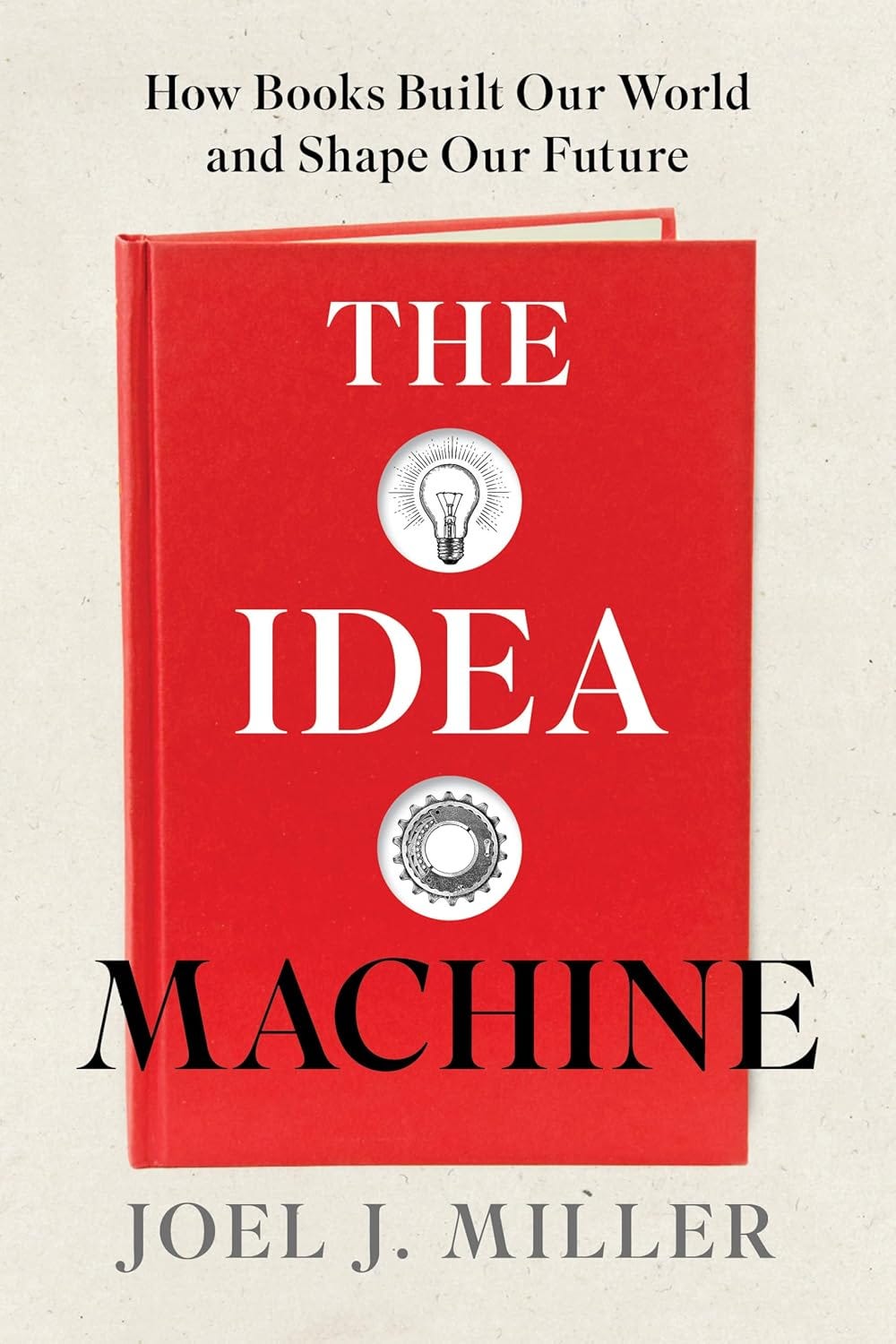
If this post inspired you to build your own library, here’s your guide for getting started:
A Guide to Booklegging: How (and why) to collect, preserve, and read the printed word

The bookleggers smuggled books to the southwest desert and buried them there in kegs. The memorizers committed to rote memory entire volumes of history, sacred writings, literature, and science, in case some unfortunate book smuggler was caught, tortured, and forced to reveal the location of the kegs…
Invitation to the 2025 Doomer Optimism Gathering
Ruth and I are excited to join so many terrific writers and thinkers at the Doomer Optimism Gathering in Ligonier, PA from November 7-8! Beyond the presentations, panels, open mics, we’ll spend time connecting over shared meals and hold lively debates over drinks and more.
We’d love for you to join us! This is a small scale event and tickets are going fast. Find out more about the event or register here:
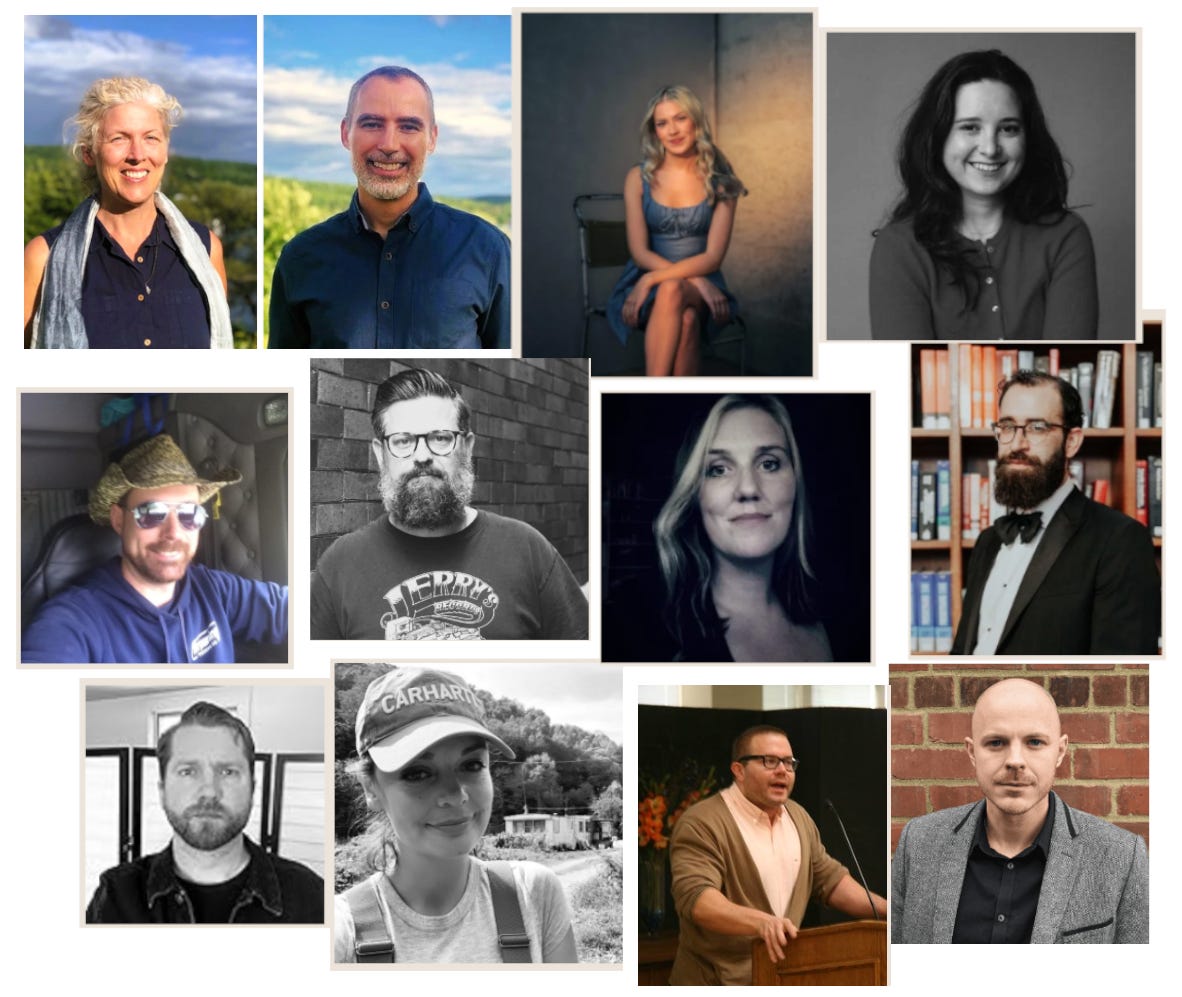
Here are some of the faces to go along with familiar names you’ll encounter:
Ruth Gaskovski, Peco, Freya India, Suzy Weiss, Autonomous Truck(er)s, Grant Martsolf, Ashley Fitzgerald, Michael Toscano, Joe Allen, Farahn Morgan, Oliver Bateman Does the Work, and Grayson Quay.
You can find out more about the speakers here.
In the midst of the Machine Age, we come together to ask urgent questions about how to live, love, and build resilient communities. This gathering is a space to wrestle with the forces reshaping our world—from the pressures of technology on family life to the ideological battles defining American politics. We’ll explore the shifting landscapes of sex, marriage, and meaning in an era of uncertainty, sharing ideas on how to push back against the Machine. Through lively conversation and insights from leading writers, thinkers, and activists, we’ll uncover ways to reclaim personal freedom, reimagine relationships, and cultivate spaces of creative resistance.
Beyond formal programming, we will also engage in poetry readings, sing-alongs, shared meals, and spirited debates over drinks. There will be plenty of time for toasts, laughter, and unhurried, meaningful conversations that deepen connections and spark fresh insights.
We encourage families to join—this event is designed to welcome and inspire all generations.
We hope to see you there!
Thanks for reading! If you found this post helpful (or hopeful), please consider supporting our work by becoming a paid subscriber, or simply show your appreciation with a like, restack, or share.
The death of handwritten note taking and physical textbooks for education has been a real loss for young people as well. It is all “of a piece,” as they say. So much creativity and real thinking comes when we get our hands “dirty”—holding and marking in the book, scratching out and revising notes, wielding the paintbrush, plucking the guitar, on and on. As my son says when I turn the physical key in the ignition of my classic manual transmission car, “so much more satisfying,” too!
Not quite on topic for this post, but something I think you guys would appreciate all the same:
https://www.dazeddigital.com/life-culture/article/68647/1/im-a-modern-luddite-the-students-who-dont-use-laptops-handwriting-university?utm_source=Link&utm_medium=Link&utm_campaign=RSSFeed&utm_term=i-m-a-modern-day-luddite-meet-the-students-who-don-t-use-laptops